“Christian couples should be aware that they are called to sanctity themselves and to sanctify others, that they are called to be apostles and that their first apostolate is in the home. They should understand that founding a family, educating their children, and exercising a Christian influence in society, are supernatural tasks. The effectiveness and the success of their life — their happiness — depends to a great extent on their awareness of their specific mission.”
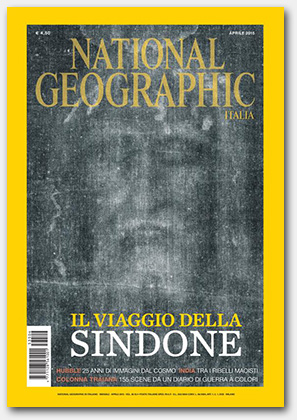
The Shroud is being displayed in Turin right now, and will be for the next 7 weeks. This Shroud fascinates me, as I'm sure it does many billions of people. National Geographic Italia recently wrote an article about it.
Why Shroud of Turin's Secrets Continue
to Elude Science
As the venerated relic goes on public exhibition, its origin remains a mystery wrapped in an enigma
By Frank Viviano, National Geographic
PUBLISHED
The 53-square-foot rectangle of linen known as the Shroud of Turin is one of the most sacred religious icons on Earth, venerated by millions of Christians as the actual burial garment of Jesus Christ.
It is also among the most fiercely debated subjects in contemporary science, an extraordinary mystery that has defied every effort at solution.
Over the 117 years since a photographic negative of the linen unexpectedly revealed the image of a tortured body, ranks of physicists and chemists have weighed in on the fabric’s age and the image’s composition. Forensic pathologists, microbiologists, and botanists have analyzed its bloodstains, along with specks of dirt and pollen on its surface. Statisticians have combed through mountains of data.
The sum result is a standoff, with researchers unable to dismiss the shroud entirely as a forgery, or prove that it is authentic. “It is unlikely science will provide a full solution to the many riddles posed by the shroud,” Italian physicist Paolo Di Lazzaro, a leading expert on the phenomenon, told National Geographic. “A leap of faith over questions without clear answers is necessary—either the ‘faith’ of skeptics, or the faith of believers.”
On April 19, the shroud goes on public display at Turin’s cathedral for seven weeks, its longest exhibition in modern history.
To readers of the New Testament gospels, the mysterious man of the shroud evokes the slain Christ, complete with signs of scourging, crucifixion, and puncture wounds caused by a crown of thorns.
The Scientific Record
Scientific inquiry into the shroud began in 1898, with the startling image captured by Italian amateur photographer Secondo Pia. Under normal conditions, only the vague sepia blur of a human body appears on the fabric. But when Pia examined the reverse negative of his photographic plate in the darkroom, he discovered the detailed likeness of a bearded man with visible wounds on his body.
For seven decades, indirect analyses of the image were conducted by researchers, most aimed at determining whether it had been painted onto the linen or produced through contact with a human corpse. It wasn’t until 1969 that scientists were allowed to examine the fabric directly, with the task of advising on preservation techniques and future testing. This set the scene for the establishment of the U.S.-led Shroud of Turin Research Project (STURP), which was granted an unprecedented five days of continuous access to the shroud itself in 1978.
The project’s 33 members ran the gamut of scientific disciplines, and their credentials included high-level posts at 20 major research institutions. They arrived in Turin with seven tons of equipment and worked in shifts 24 hours a day. An associate team of European scientists acted as expert observers.
Their analyses found no sign of artificial pigments. “The Shroud image is that of a real human form of a scourged, crucified man. It is not the product of an artist,” the project’s 1981 report declared. “The blood stains are composed of hemoglobin and also give a positive test for serum albumin.” But the report also conceded that no combination of “physical, chemical, biological or medical circumstances” could adequately account for the image.
The Shroud of Turin, the STURP team concluded, “remains now, as it has in the past, a mystery.”
The Carbon-14 Bombshell
In 1988, the Vatican authorized carbon-14 dating of the shroud. Small samples from a corner of its fabric were sent to labs at the University of Oxford’s Radiocarbon Accelerator Unit (RAU), the University of Arizona, and the Swiss Federal Institute of Technology. All three found that the shroud material dated to the years between 1260 and 1390, more than a millennium after the life and death of the historical Jesus. The labs assessed the reliability of their estimate at 95 percent. To make the case even more convincing, the dates closely coincided with the first documentedappearance of the Shroud of Turin in 1353.
Since their release 27 years ago, the carbon-14 dating results have become the focal point of the shroud controversy, with a stream of critics taking aim at its methodology and conclusions.
Among the most innovative critiques were those published in 2010 by statisticians Marco Riani, of the University of Parma in Italy, and Anthony Atkinson, of the London School of Economics. In a recent interview with National Geographic, they noted that the laboratories conducting the carbon-14 tests were in full agreement on the ages of control fabrics from an ancient Egyptian mummy, a medieval Nubian tomb, and a medieval French ecclesiastical vestment. Yet raw data from the same tests on the shroud yielded results that differed by more than 150 years.
The published carbon-14 findings were the mean results drawn from the combined data of the three labs. It was assumed that the data were “homogeneous”—near-identical age estimates based on repeated measurements of the samples, each of which had been divided into four segments for testing.
But when computers crunched through all 387,072 ways to cut the samples, they identified a marked pattern of variations. “The dating which comes from a piece at the top edge [of an uncut sample] is very different from the date which comes from a piece taken from the bottom edge,” Riani explains.
“Our research does not prove that the shroud is authentic, nor that it is 2,000 years old,” he cautions. But it does call into question the carbon-14 report’s assertion of “conclusive evidence that the linen of the Shroud of Turin is medieval.” The Oxford lab insists that the 1988 conclusions were accurate, and rejects arguments that the test samples were flawed.
The Question of Questions
Looming above all other issues is what physicist Paolo Di Lazzaro calls “the question of questions”: how the image was produced, regardless of its age. Every scientific attempt to replicate it in a lab has failed. Its precise hue is highly unusual, and the color’s penetration into the fabric is extremely thin, less than 0.7 micrometers (0.000028 inches), one-thirtieth the diameter of an individual fiber in a single 200-fiber linen thread. Di Lazzaro and his colleagues at Italy’s National Agency for New Technologies, Energy and Sustainable Economic Development (ENEA) conducted five years of experiments, using state-of-the-art excimer lasers to train short bursts of ultraviolet light on raw linen, in an effort to simulate the image’s coloration. The ENEA team, which published its findings in 2011, came tantalizingly close to approximating the image’s distinctive hue on a few square centimeters of fabric. But they were unable to match all the physical and chemical characteristics of the shroud image. Nor could they reproduce a whole human figure. The ultraviolet light necessary to do so “exceeds the maximum power released by all ultraviolet light sources available today,” says Di Lazzaro. It would require “pulses having durations shorter than one forty-billionth of a second, and intensities on the order of several billion watts.”
If the most advanced technologies available in the 21st century could not produce a facsimile of the shroud image, he reasons, how could it have been executed by a medieval forger?
For believers, the radiation thesis suggests that a “divine light” in the tomb might have seared the crucified form of Jesus Christ onto the shroud. “One could look at hypotheses outside the realm of science, a sort of miracle,” says Di Lazzaro. “But a miracle cannot be investigated by the scientific method.”
Read the rest by clicking the magazine cover above.
So, yesterday I went to Adoration. This was admittedly maybe the 2nd or 3rd time in my whole life I'd participated in such a thing, and the first time in a church for an entire hour, with only myself and Jesus in the form of a consecrated host present. It gave me time to pray - the rosary, the liturgy of the hours, and just straight from the heart stuff - and time to meditate. It was peaceful, there in the quiet church. Quiet is not a luxury I get to experience very often, and I sometimes forget how powerful it can be.
I sat there, staring at the host, and then at the large crucifix above it, at the life-sized statue of Jesus on the cross. And I got to thinking. Those two things. Were they same thing? Really? This piece of bread? My head has examined the evidence time and again. And I have come to the conclusion, in my head, that... if I believe what the Bible says, if I believe what Jesus himself says in John 6, and I believe what the historical church has taught from it's very inception 2000 years ago, then this most astounding thing is fact. The bread IS Jesus. Logically, I know this most illogical thing is truth. I can't seem to rationalize it away. Theologically, the Real Presence also makes perfect sense to me. I've written about it time and again, and I understand that I NEED the real, actual presence and person of Jesus inside of me, so that I may take Him on, so that I may abide in Him as He abides in me. And I read the Bible, and I see the Old Testament foreshadowing, the preparation, for this most sacred of mysteries, and.... I get it. In my head, I "get" the Eucharist.
But it's different when you're there, sitting, in the quiet. With the bread and the crucifix juxtaposed so closely together. My head is there. Is my heart? Sitting in a quiet church alone can make a person feel close to Jesus. The stained glass, the candles, the altar, the statues. All of it. The house of God, in and of itself, seems to be a little gateway to Heaven. But it was different with the host exposed. Honestly, I was a little nervous. There was a tangible presence there, and even though I consume the host every Sunday, it felt as if I had a private audience with Someone that I'd previously only known in a "group setting". Silly. But true. A first date, if you will.
My time there at adoration made me think back to the Miracle of Lanciano, and the Miracle of Buenos Aires. 1400 years ago, a priest celebrating mass in Italy had similar doubts. Was this bread REALLY Jesus? And there, before his eyes, the bread turned into flesh. And it's still there, sitting in a church in Italy:
In Buenos Aires, in 1996, another Eucharistic Miracle took place in the diocese run by then Bishop Jorge Bergoglio, now Pope Francis. A host that had fallen to the ground was placed in a glass of water to dissolve. Instead, it grew into flesh.
The scientific studies on both of these occurrences fascinate me.
In 1971, Odoardo Linoli (an Italian professor of anatomy and pathological histology) studied the Lanciano miracle. His research was published in "Quaderni Sclavo di Diagnostica Clinica e di Laboratori" at the time. I have a copy of the full article, in Italian. Luckily, Google translates things for me. Dr. Linoli concluded the following:
"A description has been given of the macroscopic aspects of the Flesh and the Blood of the Eucharistic Miracle which happened in Lanciano back in the eighth century. Histological studies have been carried out with the following results: Flesh is composed of mesodermal tissue and recognizable as heart tissue, myocardium and endocardium. Several studies on Blood, in particular thin layer chromatography, allowed to recognize it as belonging to Blood. The human nature of the ancient Blood and Flesh in Lanciano was identified immunologically by Uhlenhuth's zonal precipitation reaction. The Blood group in elution fluids of the ancient Blood and Flesh is the same in both tissues (AB group). The electrophoretic tracings of serum proteins of the ancient Blood show quite superimposable pattern to those obtained with a fresh serum. In the ancient Blood low amounts of sodium, potassium, chloride, non organic phosphorus and magnesium were found while calcium levels were increased."
So, human heart tissue, and blood type AB.
The Buenos Aires sample was studied by Dr. Frederick Zugibe, an expert in forensic medicine. He found that the sample he was given (he had no idea his sample had come from a consecrated host) could be "identified as a fragment of the heart muscle, which due to the large amount of white blood cells and the inflamed condition of the sample must have been taken from a living heart that had suffered a great stress situation."
The sample was also studied by Neuropsychopharmacology Physiologist Castañon Ricardo Gomez from Bolivia, who sent part of the sample to the Analytical Forensic Institute in San Francisco. "The Institute noted that it was human blood, confirming the previous studies. The DNA code is uniquely human. The samples were also sent to Professor John Walker of the University of Sydney in Australia. Independently of any other studies it was found that the muscle cells and white blood cells originate from a human and are perfectly intact. The studies also showed that the tissue was inflamed, which means that the person to whom it belongs, had suffered a trauma. In 2003, Walker told Castañon that the samples comply with an infected male, according to the signs also still alive according to the state of the heart."
Further comparisons of the two samples, 1300 years apart in age, and half a world away in distance, showed the following:
"The comparison showed that the studied samples come from the same person in both cases. The blood type is AB + for each, which occurs in about five percent of all people worldwide. The DNA is the same in the both cases. In addition, there are features that the man came from the Middle East. Further comparisons showed the same agreement with the grave cloth of Turin and the Sudarium of Oviedo."
HELLO!!
That's bombshell stuff, people. I don't need miracles to believe in the true presence of Christ in the Eucharist, but if I DID? Bombshell. Stuff. Big time.
And sitting there at church yesterday, in the quiet presence, praying and meditating in front of the host staring back at me from the altar, time flew by much quicker than I'd expected it would. By the end of that mere 60 minutes, I knew. Not just in my head. But in my heart. How it happens, I have no idea. It's a miracle each and every time it does. Ordinary bread. No longer ordinary. REAL.
So often, I feel more like the Magi than the Shepherds at the Nativity. Instead of rushing to the feet of Jesus, dropping everything and just GOING, I think, I ponder, I calculate, I think again. I get there. Slowly, deliberately, maybe getting sidetracked along the way. If I simply took what I was taught, if I had the faith of the simple, the children, I would get there much sooner. If I was a shepherd, I'd be there right away. But I am the magi. And thankfully, the Lord accepts me, too.
I am not worthy. SO not worthy of this gift.
"But only say the word, and my soul shall be healed. "
"Help me to journey beyond the familiar and into the unknown. Give me the faith to leave old ways and break fresh ground with You." — St. Brendan
Rob and I were sitting together on the back porch, soaking up the spring sun, watching the kids play some kind of baseball/football/karate/sword-fighting game. It felt good to be outside, in warmth, and see green grass, budding trees, and daffodils. Winter is behind us.
"You know," my husband said. "I was really crabby and irritable this morning." Uh, yeah. I noticed. But I didn't need to agree out loud.
"And I was in such a bad mood, I didn't want to go to church today. But then I thought 'who am I hurting by doing that? Only myself.'" That is totally true, and I said so.
"But every stinking time I go to St. Anne's, I am totally overwhelmed. I end up in tears, and am so moved by the whole thing, feeling God so present. It's embarrassing that I cry every time."
"That's the Holy Spirit, Rob. He's calling to you."
"Really? How do I know it's not just my mind playing tricks on me?"
"Are you seeking an emotional experience? Are you anticipating it, and expecting it to happen?" I asked.
"Heck no. Just the opposite. I keep waiting for it all to get old hat, but it never does! And I look around and wonder - is everyone feeling this here? Is everyone being swept away by the sheer magnitude of it? Because I feel like I'm seeing a little bit of heaven every week. The church bells ring when the Eucharist is consecrated, and I get chills. That's the second. The second it happens. The bells are telling everyone."
"I feel it, Rob. It's thick with it. And it surprises me every time, too."
"And then I get this feeling like I want to share it with EVERYONE. Like shout it from the roof tops. HEY EVERYONE!! Do you have any idea what you're missing??? But I'm so afraid that it's going to be taken the wrong way. Like if I tell people, they're going to feel like I'm judging them, and telling them they're wrong. It's not that. I just want everyone to know what they're missing! The fullness of it all."
"So, that's the Holy Spirit, Rob."
"Are you sure? Because I keep wondering. Is it the music? Is it the homily? Is it the bells and whistles that get me? My brain keeps asking these questions, because this is just not like me. "
I know this. My rational, logical, largely un-emotional husband weeps during mass. Every week. And it scares him to death, to not be in control of himself.
"How do I know this is the Holy Spirit, and not my brain playing tricks on me? I mean, every church out there says they can 'feel the spirit'. How do I know this is really it?"
"Rob," I reply. "You know."
And he does.
He's not responding to grandiose music, and fancy speeches. He's not being manipulated into feeling a certain way. My husband is being swept away by beauty. By reverence. By humility. And by Truth. And that is GOD. Present and available to us here, in our out-of-the-way corner of earth.
"There is no good trying to be more spiritual than God. God never meant man to be a purely spiritual creature. That is why He uses material things like bread and wine to put the new life into us. We may think this rather crude and unspiritual. God does not: He invented eating. He likes matter. He invented it." C.S. Lewis
Reflections on my Religious Conversion for Colby, Quinn and
Reagan
It’s Holy Week 2015 and come this Saturday during Easter Vigil I will be
converting my faith from a life-long 45 year Missouri Synod Lutheran Protestant
to a Roman Catholic. Your mother says I should write my “testimony” down before
it’s lost forever and I tend to agree, having fallen square into middle age
this year. By the time you read this, in all honesty, I’ll probably be long
gone. This story will be embedded in one of dozens of family “blog books” your
mother has written, which probably won’t be looked at by you guys until one day
you get a little sentimental about your early family life. My hope is that this
story may be of use to each of you someday as you each grow and struggle with
your spiritual faith.
So my
story begins in the Rocky Mountains of Montana. I had flown my home-built
experimental airplane into Meadow Creek Airstrip in the Bob Marshall Wilderness
in July of 2014. This awe-inspiring place has always had special meaning to me.
I continually yearn for the rugged solitude and mountain cathedrals here. I had
flown-in a book your mother had given me to read on the life of Saint Padre
Pio, a Capuchin monk from Italy. She thought his story would
resonate with me, so I began to read it each morning over coffee.
As it turns out, instead of spending the whole day fly-fishing,
I yearned to return and keep reading. I learned about a selfless human being and
was struck by his absolute incredulous love for his God. He performed miracles
and healings, but one small thing stuck with me. People from all over the world
came to him for confession, and asked for forgiveness of sins, even some
nonbelievers. I remember, through his ability to read human hearts, he denied
absolution of sins to some. This affected me; more on this later. Over
the course of several days I began to feel like Moses at the Burning Bush. I
found myself talking and weeping out loud to both God and Pio, as they were
right there with me.
Six months later, we went
to a mass at St. Ignatius (our family had been alternating mass and Lutheran
worship since Reagan had been born). What happened during this Mass was
pivotal. A prominent catholic fellow in our pew decided not go up for Eucharist this particular day, so I asked your mother why? She said he probably had forgotten to fast, or committed a severe sin of some
sort and did not feel “right with God” to commune. I was confused, because as a
Lutheran, during the liturgy each week we confessed our individual sins within
our hearts and the Pastor then absolved aloud everyone of ALL sin and we
then communed.
So I decided to investigate what she meant, and discovered that
the Church teaches there are two types of sin for a Christian: mortal and
venial. At first I was offended that the Church went so far as to itemize and
classify all of types of sin. I was further offended to read that mortal sin
severs one’s relationship with God and that, unless confessed to a priest, one
would be damned to hell. Seriously? However, once I understood that the basis
of mortal sin was the Ten Commandments, I knew the Church did not make this
stuff up. I then went to the Missouri Synod doctrine website to see what their
position was on absolution of sin. Like expected, sin was not qualified, and
blanket absolution was given to all parishioners during the liturgy. The option
did exist, however, for confession to a Pastor, although I had never heard of
that being done (I was a church elder for six years).
I then went to scripture. Jesus said in John 20:23:
"Then he breathed on them and said, 'Receive the Holy Spirit. If you
forgive people’s sins, they are forgiven; if you do not forgive them, they are
not forgiven.'” This verse single-handedly proved to me that private
confession of sins to a Pastor is essential. Sin cannot be forgiven, unless
it is first confessed to someone. I then began to wonder how many of my past
sins had truly been forgiven. I also began to question the authority of my
Lutheran Pastor to even grant me absolution should I approach him for private
confession, as I came upon another pivotal verse where Jesus speaks. Matthew
16:18: “And so I tell you Peter: you are a rock and on this rock foundation I
will build my Church, and not even death will ever be able to overcome it. I
will give you the keys of the Kingdom of Heaven, and what you permit on earth
will be permitted in heaven.”
Next thing I know, I tell your mother that I think I would like
to talk to a Catholic priest to see if he would hear my confession of sin in
return for absolution. Lent was approaching and I felt a need for a “clean
slate” going forward to Easter. I had recalled Jesus and Pio forgiving
the sins of anyone who was heartily sorry for them; why not me? So your
mother says "you should hear this new priest Father Ben Haase in Chassell;
on several occasions he has spoken directly to people and their hearts during
the homily". We did and she was spot-on. His entire homily was about the
Sacrament of Reconciliation and how people are missing out on this wonderful
gift of grace from God. He specifically mentioned that confession in the heart
does not work. God still sees sin in your soul like a dog trying to bury a bone
on the living room carpet. I then absolutely knew I wanted this sacramental
gift, so later I went and met with him.
Upon my asking for absolution this Lenten season, you know what he said?
"No way! Come join our family and enjoy all seven sacramental gifts!"
Ugh. So he gave me some Catholic propaganda (including some Scott Hahn
material; a Presbyterian minister convert) and I went to work the following
day. Surprisingly, I thoughtfully looked at the position of the Church on all
of the issues and realized, Jeez, I’m there. What’s holding me back? So I then
knew all that remained for me was to address the two pillars of Luther’s
Protestantism: Sola Fide (faith alone) and Sola Scriptura (scripture alone).
Sola Scriptura: The bible, as we know it, was not pulled together until
about 400 AD. Dozens of apostles and disciples (the early
Church-“Catholic”-fathers), painstakingly vetted all of the Letters, Gospels,
etc. into what all Christians now accept as the modern day bible. I had never
thought about where the bible had actually come from; in my mind it was like
Jesus magically handed the Apostles the New Testament and said run with it to
all corners of the world! I was amazed at all of the different councils held to
maintain this “deposit of faith” so that it adheres as close as possible to
Jesus’ original teachings. This resonated well within my logical mind. I wanted
to be part of a Church whose teachings were distilled down to the essence of
what Jesus originally wished to convey. It became clear to me which church had
the authority now. Today we have seen the direct result of people trying to
interpret the bible on their own: thousands of Protestant faiths. It is
essential to have modern day authority to interpret the bible for us. The
Church has done this for several thousand years and none of the teachings have
changed! Good stuff. One pillar gone.
Sola Fide: This one I sort of flushed out early on. Luther
claimed that faith in Jesus alone will pave the way to eternal life. I always
believed, prayed and felt I had a personal relationship with Jesus. No doubt.
I’ve always been told that that was all that was required for salvation. But
this past year, I felt like something was missing. I was proclaiming a faith
but realized I was not living the faith. Like the old saying goes, even demons
believe in Jesus. It was profound to see in black and white what God’s
expectations are (mortal sin=10 commandments) and a road map of expectations to
live by. I needed that and suspect most people do. Sola Fide is like performing
a job with no mentoring and expectations for success. Second pillar gone.
Over the years, I’ve always been fond of a back-door approach to witnessing
validation of which Christian religion has true divine authority. How? Watch
what the Evil One does and who he goes after. What is one of the greatest
events for a satanist? The black Mass. And what do they do? Attempt to steal
the host from Catholic tabernacles. Why? Because they know it is the actual
body of Christ and want to use it to mock Jesus. Also, who do people call when
they want an exorcism? A Catholic priest. Who does our culture, including some
Fundamentalist Protestants, vilify with abject hatred more than anyone else?
The Church, in spite of being the biggest advocate for life and moral decency.
It’s mind blowing how hated the Church is, even over militant Islam. As I write
this, ISIS is systematically going through the Middle East like jackals and
raping, beheading, burning alive, throwing Christians, women, and homosexuals
off buildings unless they convert to Islam. Yet in our culture, Christians are
the bigoted barbarians. I digress. There’s a reason why the Church is so hated:
it is indeed the bride of Christ with His authority. The devil has also been
successful in dividing up the Church beginning with Martin Luther and continues
to do so.
Yes, the Church has had its share of scandal through the ages
and Martin Luther was right that the Church needed reform to mitigate abuses
(e.g. indulgences sought by the church to fund projects). However, reforming
the Church should not have meant changing original doctrine. Most
fundamentalists solely hang their hat on condemning the Church for these
abuses, and I was one of them at one time. But what I’ve come to realize, is
that once I admitted and recognized the anti-catholic bias woven into me, and sought
only the truth, I recognized that the Catholic popes, deacons and priests are
all fallible, sinful guys like us. And you know what? The teachings have
remained unchanged for several thousand years and the Church continues to
thrive and endure (1.2 billion Catholics and counting) like Jesus promised to
Peter when he instructed him to build his church and handed over the keys to
heaven.
So this Saturday, I will receive the Holy Spirit directly from a
priest laying his hands on me, who has had hands laid on him all the way back
to Peter (Apostolic Succession) and will share in the feast of Eucharist united
for the first time with my beloved family and newly adopted Church family. I
have become part of the Fellowship of the Unashamed.
And if I have passed to the other side, know that I’m surrounded by
Jesus, Pio and all the Saints gone before me. We are all here praying for you
each and every day and await your triumphant and joyous arrival! I love you
Colby, Quinn and Reagan!
THE FELLOWSHIP OF THE UNASHAMED .
I AM A PART of the Fellowship of the Unashamed.
The die has been cast. The decision has been made. I have stepped over
the line.
I won't look back, let up, slow down, back away or be still.
My past is redeemed, my present makes sense, and my future is in God's hands.
I am finished and done with low living, sight walking, small planning,
the bare minimum, smooth knees, colorless dreams, tamed visions, mundane
talking, frivolous living, selfish giving, and dwarfed goals.
I no longer need preeminence, prosperity, position, promotions, applause,
or popularity.
I don't have to be right, first, the best, recognized, praised, regarded,
or rewarded.
I now live by faith. I lean on Christ's presence. I love with patience,
live by prayer, and labor with the power of God's grace.
My face is set. My gait is fast, my goal is heaven.
My road is narrow, my way is rough, my companions are few, my Guide is
reliable, and my mission is clear.
I cannot be bought, compromised, detoured, lured away, turned back,
deluded, or delayed.
I will not flinch in the face of sacrifice, hesitate in the presence of
adversity, negotiate at the table of the enemy, ponder at the pool of
popularity, or meander in the maze of mediocrity.
I won’t give up, shut up, let up or slow up until I have stayed up,
stored up, prayed up, paid up, and spoken up for the cause of Christ.
I am a disciple of Jesus. I must go till He comes, give until I drop,
speak out until all know, and work until He stops me.
And when He returns for His own, He will have no difficulty recognizing
me.
My banner is clear: I am a part of the Fellowship of the Unashamed.
Adapted from the original (author unknown) by Patrick Madrid
What is the message that Jesus has for the world? At first he seems to confirm his followers' hopes: "The hour has come for the Son of man to be glorified." Great! Finally, after putting things off for so long, he is ready; the moment has come.
But then he clarifies: "I solemnly assure you, unless the grain of wheat falls to the earth and dies, it remains just a grain of wheat, but if it dies it produces much fruit." Believe me, this is not what his followers wanted to hear.
The Jews had had more than enough experience with death. They had lived under oppression for centuries and their glory days were long ago. The Roman boot was pressing down upon them. Those who would endeavor to throw it off were imprisoned or killed. And now this one, upon whom they had pinned their hopes, at the high point of his life, is speaking of falling to the earth and dying.
Then it gets stranger: "The man who loves his life loses it, while the man who hates his life in this world, preserves it to life eternal." Come again?!
To understand what all this means, we should go back to the great image that Jesus uses, the grain of wheat that falls to the earth. A seed, resting by itself, can exist for a long time. In fact, they have found seeds in the tombs of the Pharaohs and seeds in fossil remains. But unless they fall into the soil and crack open, nothing further comes of them. Their life is inside, yes, but it's a life that grows by being given away and mixing with the soil around it. It has to crack open and be destroyed. But even after a very long time, a seed can grow into a flourishing plant. The oldest seed that has grown into a viable plant was a 2000-year-old date palm seed from excavations at Herod the Great's palace on Masada in Israel. It was germinated in 2005.
When you look at a great tree or a plant, you see none of the original seed, and yet you see life. The same is true of the cross. When Christians look at the cross, we no longer see death, but eternal life.
It is Holy Week, and the Spirit is moving in this house more than ever this year. It is an awe-inspiring thing, and we are humbled. As part of our preparation for Easter, we had a Seder meal with good friends of ours. It was lovely, and reverent, and moving. Just perfect. And it led to a discussion afterwards about the difference between symbols and sacraments. Which, of course, got me thinking.
A sacrament is an outward sign of an invisible grace. This means that physical, concrete, "things we can perceive with our senses" symbolize something that is happening on a spiritual realm. Because, after all, we are physical, concrete things that experience reality through our senses. So something we see, touch, taste, hear, smell here in this world, reveals and facilitates the blessing and grace of something that we can't see, touch, taste, hear, or smell. We receive God's grace, His POWER, through physical things. Not through the power of those physical things themselves, but through the power of God. Because that's how He designed us to experience reality, and knows what we need.
As we did our Seder, I began to see the difference, then between the symbol and the sacrament. We broke bread, passed it, spoke the words of Christ at the last supper. It was a tool for learning, teaching ourselves and the children, remembering. And it WAS a blessing to us. It brought us closer to each other and to Christ. So, how was it different than what we do at Mass on Sunday, when we essentially do the same thing during the words of institution? The difference was that, as lovely as it was, it did not instill GRACE. It was merely a symbol, and as edifying as a symbol can be (believe me, I love probing the depths of symbolism in this world!), it does not have POWER. The sacrament has grace, which is God's POWER. The symbol explains, edifies. This does not mean that a sacrament does not also have symbolism. It obviously does. But it is MORE than symbolism. It has to be, because we need God's help in a much more concrete way than with just our minds. Our bodies need Him, our soul needs Him.
So, how do I feel this power, this grace? Sometimes we don't, and that's where our senses hinder us. But just because I don't feel something, doesn't mean it's not happening. An infant feels the water of baptism, which is temporary, yet that water leaves an indelible mark on that infant's soul, and causes him to become "born again", of water and spirit, just as Jesus said. He is a profoundly different creature after baptism than he was before, even though our senses don't perceive the change, except that the child is now a little wet.
Same is true of the Eucharist. Our senses perceive bread, wine. And just as the child looks no different according to our corporal selves after baptism, so the host looks no different after consecration. But it is. Profoundly different. Whether we perceive that or not. And as we consume that consecrated host, it becomes not merely bread for our belly (symbolizing an occurrence two thousand years ago) but salvation for our soul, transforming our nature into that of Christ Himself, so that we may be incorporated into His divinity, to one day stand in the presence of Almighty God.
There have been times when worlds have collided - when that spiritual realm poked through into the world that I can perceive, and I know this is true. The power and grace of sacrament. Those are called "miracles". They are when our eyes are opened to see what is really happening on the spiritual side. They are "signs", little glimpses behind the curtain. When my toddler son was blessed with oil during the anointing of the sick, we had faith that those words, that oil, was impacting his soul. The "miracle" was that we had the enormous privilege of witnessing the effect of that day, in his physical body. His severely damaged kidney was healed. Verifiably, inexplicably. As a sign of the healing on a spiritual level, his physical body reflected that. That is POWER. Real power. Associated with concrete movements, concrete things.
So, the symbol merely edifies, but the sacrament really DOES. The sacrament is the REAL THING, the symbol refers us to the REAL THING. And the two are distinct from each other. There is a symbolic nature to the sacrament, true. But there is no sacrament to a mere symbol. And that makes all the difference.
Because Christ did not merely "symbolize" God. He did not teach us about God, remind us about God. He WAS God, that we could see, and hear, and touch, and interact with. The ultimate sacrament, God Personified. Grace personified.
God could not keep, as it were, the secret of His Love — and the telling of it was Creation. Love overflowed.
Eternity moved and said to time: “Begin.”
Omnipotence moved and said to nothingness: “Be.”
Light moved and said to darkness: “Be light.”
Out from the fingertips of God there tumbled planets and worlds. Stars were thrown into their orbits and the spheres into space. Orbs and brotherhoods of orbs began to fill the heavens. The great march of the world began, in which planet passes by planet and sphere by sphere, without ever a hitch or a halt.
In that long procession of the unfolding of the Creative Power of God, there came first, matter; then palpitating life, and the Paradise of Creation with its fourfold rivers flowing through all lands rich with gold and onyx; and finally those creatures made not by a Fiat but by a Council of the Trinity—the first man and woman.
"If you wish to explore the Holy Scripture, and you overcome your laziness and apply yourself, thirsting for the knowledge, then every good thing will be yours. You will fill your mind with the divine light. Then, when you apply that light to the doctrines of the Church, you will very easily recognize everything that is true and unadulterated, and lay it up in the hidden treasures of your soul." — St. Cyril of AlexandriaCirca 400 AD
"I pray that the God of our Lord Jesus Christ, the Father of glory, may give you a spirit of wisdom and revelation as you come to know him, so that, with the eyes of your heart enlightened, you may know what is the hope to which he has called you, what are the riches of his glorious inheritance among the saints, and what is the immeasurable greatness of his power for us who believe, according to the working of his great power." Ephesians 1:17-19
Medieval scholars said that the human being was a kind of microcosm, since he bore within himself the spiritual and the physical. Through his body, man reached down to the lower elements and was one with the animals and minerals, but through his mind, he reached upwards to God and the angels.
We know instinctively how right this is. On the one hand, we can explore the intricacies of mathematics and geometry. We can soar with Mozart and Shakespeare. We can design high-level computers and machines that can move through the galaxy. We can enter into the depth and silence of prayer, becoming as much like the angels as possible. In so many ways, we strain upward to our home among the spirits.
On the other hand, we are, like it or not, animals. We need food and drink. We get too hot and too cold. We experience instincts and emotions that often get the better of us. We revel in the sheer pleasure of the senses and the thrill of being touched. We love to run, to exercise our muscles. We exult in the rough and tumble of very physical competition and play.
This is our glory - we combine the best of both worlds - but it is also our agony, the source of much of our sadness and conflict, for it entails that we are a hybrid, a half-breed, something of a metaphysical mongrel. We bring together two qualities that are at odds with each other. The spirit strains against the body, and the body strains against the spirit. Sometimes the spirit commands and the body refuses to obey; sometimes the body makes demands that the spirit cannot or will not accommodate. This tension is one of the faces of sin. It is the result of the dislocation between ourselves and God.
The harmony of the spiritual and the physical seems to be what God savors and intends. The spirit commanding the body, but the body also informing the spirit. There is a proper hierarchy between them, but it must never become a tyranny. The demands and goods of the body must always be respected and must even, to some degree, shape the life of the spirit. We were made as embodied spirits, or if you prefer, as spiritualized bodies. And we will be saved as spirit-body composites.
So, yesterday was St. Patrick's day, and as we sat around the dinner table eating our Rueben sandwiches and learning about the man who drove paganism out of Ireland, my husband asked a very good question.
What is a saint, exactly? Easy answer: believers in Christ in heaven and on earth. But he was wanting to know about canonized saints, and the use of the same word to describe two things was confusing him. "I mean, we're not naming churches after my aunt Dorothy right now". So we talked about the canonization process, and what that entails, and how Christians have from the beginning raised up certain people as extraordinary examples of how to follow Christ during our time on earth. And they honor and remember them, and ask for their prayers.
So that led to a discussion about the communion of saints. I've always understood that to mean that all believers, both living and dead, are connected. The church isn't just made up of those of us who happen to be alive and walking around on the planet. It also includes all those who went before us, who still pray and intercede for us here on earth. And in turn, we can also pray for them. "Brothers and sisters in Christ" and all that.
But Rob was struggling with the idea of indulgences, and I have to admit... I struggle with that idea, too. "If a person is being cleansed to be in the presence of God, I really don't think someone else doing something or praying to God should effect that. It's an individual thing." That's what makes sense in my mind, too. We're responsible for ourselves, and our choices. But that's not what the Bible says. The Bible says that we are all parts of one body, the body of Christ. That is the Church. His body. Now, we can think that's all really nice figurative speech, but what if it isn't? What if that "body of Christ" is far more literal than I understand it to be? When Christ struck Paul blind on the road to Damascus, He didn't ask "Why are you persecuting the church?" He asked "Why are you persecuting ME". ME. Christ himself. Singular. Rob said, "Oh, like one organism?" And I stopped to pause to process that for a moment.
So there was a really big AHA moment for me. When Rob mentioned "one organism", not just a loose, figurative "club" made up of individual people and figuratively acting as one.... that made things fall in to place. ONE ORGANISM. It's why, in the early church, when a person sinned, he didn't just have to confess to a priest individually, but to the entire congregation, to restore himself to the whole group. And it's why those "victim souls" who offer their suffering for the intentions of others - why that works. Why my prayers of intercession for others, my actions of love, effect the Church as a whole, and not just me individually. So many things making up one unified thing. Like cells of the same body. If a poison or disease enters one part of the body, it effects the whole body. Likewise, if one part of the body is hurting, the other parts (immune system, blood supply, neurological) rush in to help heal. Many things in one. Like a father, mother and child make up a family. Like three beings in one God: the Trinity. Which means we are in the image and likeness of God in a way I'd never understood before. Not just individually. But together.
The Communion of Saints. One organism. Here to do the work set before us by Christ to transform the world.
Do you think those early Christians, those fervent martyrs whose blood mixed with Christ's to form the foundation of the Church we know today, do you think they were Christians for the same reasons many profess to be Christian today? As they were torn apart by lions in the Coliseum, did they profess loudly to the throngs "Those homilies were GREAT!" As they were being torn limb by limb, did they say "I really felt welcome there at church." "It has great kids programs" or "I really liked the music"? Was it really about doughnuts and community for them? Really about the "I"? What "I" get out of being there every Sunday, as if it were some self-help program for a happy life?
To the point of horrific death?
Inconceivable.
Those witnesses gave their lives for the only reason TO be a Christian.
Because it's TRUE.
Nothing less than that is worth dying for. Then. Or Now.
I have followed Blythe Fike's blog for a few years now, and feel like she and I are "friends". In reality, it's more like a stalker-stalkee relationship, because she doesn't know me at all, and I feel like I know ALL about her and her awesome family. We're tight. Regardless... she did a video for SoulPancake a few years back, and I just rediscovered it, so thought I'd share.
"But you, ‘a chosen generation,’ weak things of the world, who have forsaken all things, so that you may follow the Lord, go after him, and confound the strong; go after him, you beautiful feet, and shine in the firmament so that the heavens may declare his glory… Run into every place, O you holy fires, you beautiful fires! You are the light of the world, and you are not put under a measure. He to whom you have held fast has been exalted, and he has exalted you. Run forth, and make it known to all nations." — Saint Augustine
Big BIG BIG changes are happening in my husband, and subsequently our family, right now. I'm not ready to write about them yet, because we're in the midst of it all, and new things are popping up every few hours. But, as surreal as it all is, it is TRUE. And very cool. This morning, I saw this blog post, and realized that it distilled down everything Rob is learning right now, in a nutshell. So I had to share. You can read the original here, compliments of Marcel Lejeune.
7 Things You Need to Know About The Catholic Church
1 – The purpose of the Church is to make disciples of Jesus. Too many people have a false understanding of the purpose of the Catholic Church. After Jesus made the Church, He gave a clear mission statement to His apostles: “Go therefore and make disciples of all nations, baptizing them in the name of the Father and of the Son and of the Holy Spirit, and teaching them to obey everything that I have commanded you.” -Matt 28:19-20. Everything else the Church does, feed the hungry, perpetuate the Sacraments, etc. is in service to this mission. Evangelization isn’t optional.
2- The Catholic Church may not be what you think it is. Catholicism isn’t just a set of doctrines or a hierarchy of clergy. Catholicism isn’t just about giving a moral code or set of social teachings. It is much more than we could ever know. The Church isn’t so easily definable, which is why we have so many different ways of describing it – “the bride of Christ”, “the body of Christ”, “the people of God”, etc. The Church’s identity is inseparable from Jesus and thus shares in the mystery of God. When we think we “know” the Church, we are fooling ourselves. This is why growing in knowledge about the content of the Church’s teachings is so important.
3 – The Trinity really does matter. Many Catholics wouldn’t bat an eye if the Pope declared we don’t need the Trinity anymore, because it makes no difference in many Catholics’ daily lives. But, it really does matter. Why? Because if God is a communion of persons, a family, and we are made in God’s image and likeness, then our families and relationships are called to reflect the same kind of relationship found in the Trinity – the gift of self to another – true love. This is where the paradox of the Gospel finds a foundation. To gain life, we must lose ourselves. To live is to die. To die is to live. All because of the Trinity…and that is just the starting point. Since God is infinite, the Trinity matters an infinte amount. I haven’t even mentioned that it is the most basic of all Christian doctrines and the starting point of everything else we believe…
4 – The Incarnation changes everything. An all-powerful, eternal, all-knowing, divine being decided to create the universe and then he becomes one of the creatures he created!!! This is mind-numbing. Furthermore, in humbling himself to take on our flesh, he raises up our nature to a greater dignity – one that now shares in his own nature. We share in God’s nature. This is flabbergasting. The world is never the same and all of creation and time revolves around this one moment – when God becomes one of us. Our response should be to see God in all of his creation, but most importantly in all of humanity, including ourselves.
5 – The Church is beautiful. Because of the first three truths above, we can now see the beauty of the Church. Is the Church full of sinners? Certainly (I am in it!). But, we sinners are not the source of the Church’s beauty, God is. We are called to reflect this beauty as best we can, but true beauty is found in the being of God, who is beauty itself. The Church reflects Christ beauty to the world. Through the Saints’ lives, the Cathedrals and artwork, through the music and songs, and through the teachings of the Church. It is in these ways we see God’s beauty rise up for a world that focuses all too often on what is ugly.
6 – Catholicism contains the most balanced teaching you will find. Catholicism holds a lot of seeming tensions in balance. They include; 1 God and 3 persons, Scripture and Tradition, Faith and Works, Jesus is human and divine, the Church is both holy and imperfect, we can know God through both faith and reason, we are a people of both prayer and action, and the Bible is written by man and inspired by God. We are a people of both/and, not either/or. While it may seem there are contradictions, there are not. But, there is mystery behind the balance.
7 – The world needs the Catholic Church. The Catholic Church has the answer for all the world’s problems in the fullness of truth and the fullness of grace she offers to the world. The Church gives us a moral anchor, an answer to broken families, addiction, sin, war, violence, abuse, and all the other issues in our culture. More than ever the world needs the Catholic Church, if our society is to last. This answer is the personal relationship with Jesus that the Catholic Church offers to us all through the Sacramental grace, teachings of the Church, and in our own personal prayer we all need.
——————————–
-Jesus created 1 Church. -We are that Church, the Catholic Church. -If the world needs the Catholic Church, then the Church needs saints. -We need to be holy if we are to change the world.
-Time to do our part. Time to be holy. Time to change the world. This is what we all need to know – and do.
"By this we know that we have come to know Him, if we keep His commandments. The one who says, 'I have come to know Him,' and does not keep His commandments, is a liar, and the truth is not in him; but whoever keeps His word, in him the love of God has truly been perfected. By this we know that we are in Him: the one who says he abides in Him ought himself to walk in the same manner as He walked."
My husband and I were discussing current events last night, and the 21 Coptic Christians who were recently beheaded. We both knew we were discussing a situation of pure, unveiled evil. My husband said "You know, it's all becoming clear - the devil's plan. It's brilliant, but I see it now. I see what he's done, and is doing - how he lies and tricks people into doing what he wants them to do. It's so clear, his strategy, of taking part of the truth, and making it evil. It's a sin against the Holy Spirit, and it's anti-Christ." Ahhhh, clarity. That's a gift from God. The older I get, the more I sound like the church lady from Saturday Night Live. "SATAN!! SATAN!"
But it's true. I see his dirty, destructive work in our society, in our marriages, in the temptations and corruptions of every day life, in our hideous rationalizations. In our apathy and our passions. Everywhere. We are a humanity under constant and ever-increasing attack, but most of us don't even know it.
And then I read this quote by Father Robert Barron, and it definitely provided an "Aha" moment.
"...then enters the serpent. Like us, the serpent is a creature of God. He is totally dependent on God for his life. He is not some sort of co-equal rival to God. The Church has always taught that evil is parasitic on the good, not a substantive opponent. Nevertheless, he is a wily opponent."
Evil is a parasite on the good.
I have always understood sin as separation from God, and that is death. But what of evil and temptation? Those entities that strive to cause our separation from God? Evil is from the devil. And evil cannot be a substance in and of itself, because the devil was created by God. It can only twist and pervert that which is good, in an effort to throw good off track. Darkness is not a substance - it is an absence of light. Evil is not a substance, it is an absence of good.
The devil made Islam a parasite on the truth. He took what is good and holy, and twisted it. In the Black Mass, he takes what is good and holy and twists it. In lust/fornication he takes what is good and holy and twists it. Every sin is a perversion of some good thing. It isn't, and CAN'T be it's "own thing", because the devil is not his "own thing" - and he hates it. He is a creation from a creator, and he resents the hell out of that (literally).
So sin is truly a cancer - an invaded good cell, reprogrammed to go out of control and lead to death instead of life. I certainly didn't make that analogy up, but it's suddenly become a whole lot more clear this morning. We can't blame the devil for all our choices, because we make plenty of those bad choices for ourselves, but the idea of evil like cancer instead of a gunshot wound to cause our death- that suddenly made sense this morning. Satan needs a host organism. He's not killing us outright, like he wants to. You don't hear of the devil coming down and destroying humanity in a bolt of lightning, even though his ultimate goal is our demise. And the reason he hasn't done that is because he can't. He's not capable of that. He can't destroy life outright, because life is from God, and the devil is no god. But he's wily and sneaky, so instead, he tempts us to make the choices that lead to our own physical and spiritual death. He creates situations and temptations that present us with choices that lead to our life with Christ, or our death with him.