Saturday, April 4, 2015

A Seed - A Message for Holy Saturday by Father Barron

Picture of a Methuselah date palm

What is the message that Jesus has for the world? At first he seems to confirm his followers' hopes: "The hour has come for the Son of man to be glorified." Great! Finally, after putting things off for so long, he is ready; the moment has come.
 
But then he clarifies: "I solemnly assure you, unless the grain of wheat falls to the earth and dies, it remains just a grain of wheat, but if it dies it produces much fruit." Believe me, this is not what his followers wanted to hear.
 
The Jews had had more than enough experience with death. They had lived under oppression for centuries and their glory days were long ago. The Roman boot was pressing down upon them. Those who would endeavor to throw it off were imprisoned or killed. And now this one, upon whom they had pinned their hopes, at the high point of his life, is speaking of falling to the earth and dying.
 
Then it gets stranger: "The man who loves his life loses it, while the man who hates his life in this world, preserves it to life eternal." Come again?!
 
To understand what all this means, we should go back to the great image that Jesus uses, the grain of wheat that falls to the earth. A seed, resting by itself, can exist for a long time. In fact, they have found seeds in the tombs of the Pharaohs and seeds in fossil remains. But unless they fall into the soil and crack open, nothing further comes of them. Their life is inside, yes, but it's a life that grows by being given away and mixing with the soil around it. It has to crack open and be destroyed. But even after a very long time, a seed can grow into a flourishing plant. The oldest seed that has grown into a viable plant was a 2000-year-old date palm seed from excavations at Herod the Great's palace on Masada in Israel. It was germinated in 2005.
 
When you look at a great tree or a plant, you see none of the original seed, and yet you see life. The same is true of the cross. When Christians look at the cross, we no longer see death, but eternal life.

Friday, April 3, 2015

On Symbols and Sacraments


It is Holy Week, and the Spirit is moving in this house more than ever this year.  It is an awe-inspiring thing, and we are humbled.  As part of our preparation for Easter, we had a Seder meal with good friends of ours.  It was lovely, and reverent, and moving.  Just perfect.  And it led to a discussion afterwards about the difference between symbols and sacraments.  Which, of course, got me thinking.

A sacrament is an outward sign of an invisible grace.  This means that physical, concrete, "things we can perceive with our senses" symbolize something that is happening on a spiritual realm.  Because, after all, we are physical, concrete things that experience reality through our senses.  So something we see, touch, taste, hear, smell  here in this world, reveals and facilitates the blessing and grace of something that we can't see, touch, taste, hear, or smell.  We receive God's grace, His POWER, through physical things.  Not through the power of those physical things themselves, but through the power of God.  Because that's how He designed us to experience reality, and knows what we need.  

As we did our Seder, I began to see the difference, then between the symbol and the sacrament.  We broke bread, passed it, spoke the words of Christ at the last supper.  It was a tool for learning, teaching ourselves and the children, remembering.  And it WAS a blessing to us.  It brought us closer to each other and to Christ.  So, how was it different than what we do at Mass on Sunday, when we essentially do the same thing during the words of institution?  The difference was that, as lovely as it was, it did not instill GRACE.  It was merely a symbol, and as edifying as a symbol can be (believe me, I love probing the depths of symbolism in this world!), it does not have POWER.  The sacrament has grace, which is God's POWER.    The symbol explains, edifies.  This does not mean that a sacrament does not also have symbolism.  It obviously does.  But it is MORE than symbolism.  It has to be, because we need God's help in a much more concrete way than with just our minds.  Our bodies need Him, our soul needs Him. 

So, how do I feel this power, this grace?  Sometimes we don't, and that's where our senses hinder us.  But just because I don't feel something, doesn't mean it's not happening.  An infant feels the water of baptism, which is temporary, yet that water leaves an indelible mark on that infant's soul, and causes him to become "born again", of water and spirit, just as Jesus said.  He is a profoundly different creature after baptism than he was before, even though our senses don't perceive the change, except that the child is now a little wet. 

Same is true of the Eucharist.  Our senses perceive bread, wine.  And just as the child looks no different according to our corporal selves after baptism, so the host looks no different after consecration.  But it is. Profoundly different.  Whether we perceive that or not.  And as we consume that consecrated host, it becomes not merely bread for our belly (symbolizing an occurrence two thousand years ago) but salvation for our soul, transforming our nature into that of Christ Himself, so that we may be incorporated into His divinity, to one day stand in the presence of Almighty God. 

There have been times when worlds have collided - when that spiritual realm poked through into the world that I can perceive, and I know this is true.  The power and grace of sacrament.  Those are called "miracles".  They are when our eyes are opened to see what is really happening on the spiritual side.  They are "signs", little glimpses behind the curtain.  When my toddler son was blessed with oil during the anointing of the sick, we had faith that those words, that oil, was impacting his soul.  The "miracle" was that we had the enormous privilege of witnessing the effect of that day, in his physical body.  His severely damaged kidney was healed.  Verifiably, inexplicably.  As a sign of the healing on a spiritual level, his physical body reflected that.  That is POWER.  Real power.  Associated with concrete movements, concrete things. 

So, the symbol merely edifies, but the sacrament really DOES.  The sacrament is the REAL THING, the symbol refers us to the REAL THING.  And the two are distinct from each other.  There is a symbolic nature to the sacrament, true.  But there is no sacrament to a mere symbol.  And that makes all the difference.

Because Christ did not merely "symbolize" God.  He did not teach us about God, remind us about God.  He WAS God, that we could see, and hear, and touch, and interact with.  The ultimate sacrament, God Personified.  Grace personified. 

Tuesday, March 31, 2015

This. On Creation.


God could not keep, as it were, the secret of His Love — and the telling of it was Creation. Love overflowed.

Eternity moved and said to time: “Begin.”

Omnipotence moved and said to nothingness: “Be.”

Light moved and said to darkness: “Be light.”

Out from the fingertips of God there tumbled planets and worlds. Stars were thrown into their orbits and the spheres into space. Orbs and brotherhoods of orbs began to fill the heavens. The great march of the world began, in which planet passes by planet and sphere by sphere, without ever a hitch or a halt.

In that long procession of the unfolding of the Creative Power of God, there came first, matter; then palpitating life, and the Paradise of Creation with its fourfold rivers flowing through all lands rich with gold and onyx; and finally those creatures made not by a Fiat but by a Council of the Trinity—the first man and woman.

By Venerable Fulton Sheen

Monday, March 30, 2015

Thought Of The Day: Enlightenment

"If you wish to explore the Holy Scripture, and you overcome your laziness and apply yourself, thirsting for the knowledge, then every good thing will be yours. You will fill your mind with the divine light. Then, when you apply that light to the doctrines of the Church, you will very easily recognize everything that is true and unadulterated, and lay it up in the hidden treasures of your soul."
— St. Cyril of AlexandriaCirca 400 AD


"I pray that the God of our Lord Jesus Christ, the Father of glory, may give you a spirit of wisdom and revelation as you come to know him, so that, with the eyes of your heart enlightened, you may know what is the hope to which he has called you, what are the riches of his glorious inheritance among the saints, and what is the immeasurable greatness of his power for us who believe, according to the working of his great power."
Ephesians 1:17-19

Thursday, March 26, 2015

Friday, March 20, 2015

On Animals and Angels - Because I've never thought about it quite like this before


By Father Robert Barron:

Medieval scholars said that the human being was a kind of microcosm, since he bore within himself the spiritual and the physical. Through his body, man reached down to the lower elements and was one with the animals and minerals, but through his mind, he reached upwards to God and the angels.
 
We know instinctively how right this is. On the one hand, we can explore the intricacies of mathematics and geometry. We can soar with Mozart and Shakespeare. We can design high-level computers and machines that can move through the galaxy. We can enter into the depth and silence of prayer, becoming as much like the angels as possible. In so many ways, we strain upward to our home among the spirits.
 
On the other hand, we are, like it or not, animals. We need food and drink. We get too hot and too cold. We experience instincts and emotions that often get the better of us. We revel in the sheer pleasure of the senses and the thrill of being touched. We love to run, to exercise our muscles. We exult in the rough and tumble of very physical competition and play.
 
This is our glory - we combine the best of both worlds - but it is also our agony, the source of much of our sadness and conflict, for it entails that we are a hybrid, a half-breed, something of a metaphysical mongrel. We bring together two qualities that are at odds with each other. The spirit strains against the body, and the body strains against the spirit. Sometimes the spirit commands and the body refuses to obey; sometimes the body makes demands that the spirit cannot or will not accommodate. This tension is one of the faces of sin. It is the result of the dislocation between ourselves and God.
 
The harmony of the spiritual and the physical seems to be what God savors and intends. The spirit commanding the body, but the body also informing the spirit. There is a proper hierarchy between them, but it must never become a tyranny. The demands and goods of the body must always be respected and must even, to some degree, shape the life of the spirit. We were made as embodied spirits, or if you prefer, as spiritualized bodies. And we will be saved as spirit-body composites.

Wednesday, March 18, 2015

The Communion of Saints and Indulgences


So, yesterday was St. Patrick's day, and as we sat around the dinner table eating our Rueben sandwiches and learning about the man who drove paganism out of Ireland, my husband asked a very good question.

What is a saint, exactly?  Easy answer:  believers in Christ in heaven and  on earth.  But he was wanting to know about canonized saints, and the use of the same word to describe two things was confusing him.  "I mean, we're not naming churches after my aunt Dorothy right now".    So we talked about the canonization process, and what that entails, and how Christians have from the beginning raised up certain people as extraordinary examples of how to follow Christ during our time on earth.  And they honor and remember them, and ask for their prayers.

So that led to a discussion about the communion of saints.  I've always understood that to mean that all believers, both living and dead, are connected.  The church isn't just made up of those of us who happen to be alive and walking around on the planet.  It also includes all those who went before us, who still pray and intercede for us here on earth.  And in turn, we can also pray for them.  "Brothers and sisters in Christ" and all that. 

But Rob was struggling with the idea of indulgences, and I have to admit... I struggle with that idea, too.  "If a person is being cleansed to be in the presence of God, I really don't think someone else doing something or praying to God should effect that.  It's an individual thing."  That's what makes sense in my mind, too.  We're responsible for ourselves, and our choices.  But that's not what the Bible says.  The Bible says that we are all parts of one body, the body of Christ.  That is the Church.  His body.  Now, we can think that's all really nice figurative speech, but what if it isn't?  What if that "body of Christ" is far more literal than I understand it to be?  When Christ struck Paul blind on the road to Damascus, He didn't ask "Why are you persecuting the church?"  He asked "Why are you persecuting ME".  ME.   Christ himself.  Singular.  Rob said, "Oh, like one organism?"   And I stopped to pause to process that for a moment. 

So there was a really big AHA moment for me.  When Rob mentioned "one organism", not just a loose, figurative "club" made up of individual people and figuratively acting as one.... that made things fall in to place.  ONE ORGANISM.   It's why, in the early church, when a person sinned, he didn't just have to confess to a priest individually, but to the entire congregation, to restore himself to the whole group.    And it's why those "victim souls" who offer their suffering for the intentions of others - why that works.  Why my prayers of intercession for others, my actions of love, effect the Church as a whole, and not just me individually.  So many things making up one unified thing.  Like cells of the same body.  If a poison or disease enters one part of the body, it effects the whole body.  Likewise, if one part of the body is hurting, the other parts (immune system, blood supply, neurological) rush in to help heal.  Many things in one.   Like a father, mother and child make up a family.   Like three beings in one God: the Trinity.  Which means we are in the image and likeness of God in a way I'd never understood before.  Not just individually.  But together.

The Communion of Saints.  One organism.  Here to do the work set before us by Christ to transform the world.

Saturday, March 14, 2015

Pondering this morning

Do you think those early Christians, those fervent martyrs whose blood mixed with Christ's to form the foundation of the Church we know today, do you think they were Christians for the same reasons many profess to be Christian today?  As they were torn apart by lions in the Coliseum, did they profess loudly to the throngs "Those homilies were GREAT!"  As they were being torn limb by  limb, did they say "I really felt welcome there at church."  "It has great kids programs" or "I really liked the music"?  Was it really about doughnuts and community for them?  Really about the "I"?  What "I" get out of being there every Sunday, as if it were some self-help program for a happy life?

To the point of horrific death? 

Inconceivable. 

Those witnesses gave their lives for the only reason TO be a Christian.

Because it's TRUE. 

Nothing less than that is worth dying for.  Then.  Or Now.


Thursday, March 12, 2015

Wednesday, March 11, 2015

St. Paul, on Faith and Works. There's no "versus" in the "verses".


"For it is not the hearers of the law who are righteous in God’s sight, but the doers of the law who will be justified."  Romans 2:13

Sunday, March 8, 2015

A Video To Share

I have followed Blythe Fike's blog for a few years now, and feel like she and I are "friends".  In reality, it's more like a stalker-stalkee relationship, because she doesn't know me at all, and I feel like I know ALL about her and her awesome family. We're tight.   Regardless...  she did a video for SoulPancake a few years back, and I just rediscovered it, so thought I'd share.


Saturday, March 7, 2015

Holy Fires


"But you, ‘a chosen generation,’ weak things of the world, who have forsaken all things, so that you may follow the Lord, go after him, and confound the strong; go after him, you beautiful feet, and shine in the firmament so that the heavens may declare his glory… Run into every place, O you holy fires, you beautiful fires! You are the light of the world, and you are not put under a measure. He to whom you have held fast has been exalted, and he has exalted you. Run forth, and make it known to all nations."
— Saint Augustine

Thursday, March 5, 2015

I didn't write this, but I wish I had.... 7 Things You Need to Know About the Catholic Church

Big BIG BIG changes are happening in my husband, and subsequently our family, right now.  I'm not ready to write about them yet, because we're in the midst of it all, and new things are popping up every few hours.  But, as surreal as it all is, it is TRUE.  And very cool.  This morning, I saw this blog post, and realized that it distilled down everything Rob is learning right now, in a nutshell.  So I had to share.  You can read the original here, compliments of Marcel Lejeune.

7 Things You Need to Know About The Catholic Church
1 – The purpose of the Church is to make disciples of Jesus. Too many people have a false understanding of the purpose of the Catholic Church. After Jesus made the Church, He gave a clear mission statement to His apostles: “Go therefore and make disciples of all nations, baptizing them in the name of the Father and of the Son and of the Holy Spirit, and teaching them to obey everything that I have commanded you.” -Matt 28:19-20. Everything else the Church does, feed the hungry, perpetuate the Sacraments, etc. is in service to this mission. Evangelization isn’t optional.
2- The Catholic Church may not be what you think it is. Catholicism isn’t just a set of doctrines or a hierarchy of clergy. Catholicism isn’t just about giving a moral code or set of social teachings. It is much more than we could ever know. The Church isn’t so easily definable, which is why we have so many different ways of describing it – “the bride of Christ”, “the body of Christ”, “the people of God”, etc.  The Church’s identity is inseparable from Jesus and thus shares in the mystery of God. When we think we “know” the Church, we are fooling ourselves. This is why growing in knowledge about the content of the Church’s teachings is so important.
3 – The Trinity really does matter. Many Catholics wouldn’t bat an eye if the Pope declared we don’t need the Trinity anymore, because it makes no difference in many Catholics’ daily lives. But, it really does matter. Why? Because if God is a communion of persons, a family, and we are made in God’s image and likeness, then our families and relationships are called to reflect the same kind of relationship found in the Trinity – the gift of self to another – true love. This is where the paradox of the Gospel finds a foundation. To gain life, we must lose ourselves. To live is to die. To die is to live. All because of the Trinity…and that is just the starting point. Since God is infinite, the Trinity matters an infinte amount. I haven’t even mentioned that it is the most basic of all Christian doctrines and the starting point of everything else we believe…
4 – The Incarnation changes everything. An all-powerful, eternal, all-knowing, divine being decided to create the universe and then he becomes one of the creatures he created!!! This is mind-numbing. Furthermore, in humbling himself to take on our flesh, he raises up our nature to a greater dignity – one that now shares in his own nature. We share in God’s nature. This is flabbergasting. The world is never the same and all of creation and time revolves around this one moment – when God becomes one of us. Our response should be to see God in all of his creation, but most importantly in all of humanity, including ourselves.
5 – The Church is beautiful. Because of the first three truths above, we can now see the beauty of the Church. Is the Church full of sinners? Certainly (I am in it!). But, we sinners are not the source of the Church’s beauty, God is. We are called to reflect this beauty as best we can, but true beauty is found in the being of God, who is beauty itself. The Church reflects Christ beauty to the world. Through the Saints’ lives, the Cathedrals and artwork, through the music and songs, and through the teachings of the Church. It is in these ways we see God’s beauty rise up for a world that focuses all too often on what is ugly.
6 – Catholicism contains the most balanced teaching you will find. Catholicism holds a lot of seeming tensions in balance. They include; 1 God and 3 persons, Scripture and Tradition, Faith and Works, Jesus is human and divine, the Church is both holy and imperfect, we can know God through both faith and reason, we are a people of both prayer and action, and the Bible is written by man and inspired by God. We are a people of both/and, not either/or. While it may seem there are contradictions, there are not. But, there is mystery behind the balance.
7 – The world needs the Catholic Church. The Catholic Church has the answer for all the world’s problems in the fullness of truth and the fullness of grace she offers to the world. The Church gives us a moral anchor, an answer to broken families, addiction, sin, war, violence, abuse, and all the other issues in our culture. More than ever the world needs the Catholic Church, if our society is to last. This answer is the personal relationship with Jesus that the Catholic Church offers to us all through the Sacramental grace, teachings of the Church, and in our own personal prayer we all need.
——————————–
-Jesus created 1 Church.
-We are that Church, the Catholic Church.
-If the world needs the Catholic Church, then the Church needs saints.
-We need to be holy if we are to change the world.
-Time to do our part. Time to be holy. Time to change the world. This is what we all need to know – and do.

Sunday, March 1, 2015

On Faith vs Works


"By this we know that we have come to know Him, if we keep His commandments. The one who says, 'I have come to know Him,' and does not keep His commandments, is a liar, and the truth is not in him; but whoever keeps His word, in him the love of God has truly been perfected. By this we know that we are in Him: the one who says he abides in Him ought himself to walk in the same manner as He walked."
1 John 2:3-6


Friday, February 20, 2015

On Sin, Temptation, and the Devil

My husband and I were discussing current events last night, and the 21 Coptic Christians who were recently beheaded. We both knew we were discussing a situation of pure, unveiled evil.   My husband said "You know, it's all becoming clear - the devil's plan.  It's brilliant, but I see it now.  I see what he's done, and is doing - how he lies and tricks people into doing what he wants them to do.  It's so clear, his strategy, of taking part of the truth, and making it evil.  It's a sin against the Holy Spirit, and it's anti-Christ."  Ahhhh, clarity.  That's a gift from God.  The older I get, the more I sound like the church lady from Saturday Night Live.  "SATAN!!  SATAN!" 

But it's true.  I see his dirty, destructive work in our society, in our marriages, in the temptations and corruptions of every day life, in our hideous rationalizations.  In our apathy and our passions.  Everywhere.  We are a humanity under constant and ever-increasing attack, but most of us don't even know it.

And then I read this quote by Father Robert Barron, and it definitely provided an "Aha" moment.

"...then enters the serpent. Like us, the serpent is a creature of God. He is totally dependent on God for his life. He is not some sort of co-equal rival to God. The Church has always taught that evil is parasitic on the good, not a substantive opponent. Nevertheless, he is a wily opponent."
 
Evil is a parasite on the good. 
I have always understood sin as separation from God, and that is death.  But what of evil and temptation?  Those entities that strive to cause our separation from God?  Evil is from the devil.  And evil cannot be a substance in and of itself, because the devil was created by God.  It can only twist and pervert that which is good, in an effort to throw good off track.  Darkness is not a substance - it is an absence of light.  Evil is not a substance, it is an absence of good. 
 
The devil made Islam a parasite on the truth.  He took what is good and holy, and twisted it.  In the Black Mass, he takes what is good and holy and twists it.  In lust/fornication he takes what is good and holy and twists it.  Every sin is a perversion of some good thing.  It isn't, and CAN'T be it's "own thing", because the devil is not his "own thing" - and he hates it.  He is a creation from a creator, and he resents the hell out of that (literally). 

So sin is truly a cancer - an invaded good cell, reprogrammed to go out of control and lead to death instead of life.   I certainly didn't make that analogy up, but it's suddenly become a whole lot more clear this morning.   We can't blame the devil for all our choices, because we make plenty of those bad choices for ourselves, but the idea of evil like cancer instead of a gunshot wound to cause our death- that suddenly made sense this morning. Satan needs a host organism.  He's not killing us outright, like he wants to.  You don't hear of the devil coming down and destroying humanity in a bolt of lightning, even though his ultimate goal is our demise.  And the reason he hasn't done that is because he can't.  He's not capable of that.  He can't destroy life outright, because life is from God, and the devil is no god.  But he's wily and sneaky, so instead, he tempts us to make the choices that lead to our own physical and spiritual death.  He creates situations and temptations that present us with choices that lead to our life with Christ, or our death with him. 
 
We're on to you, Satan.   


Thought Of The Day

 
"Start by doing what is necessary; then do what is possible; and suddenly you are doing the impossible."
— St. Francis of Assisi

Thursday, February 12, 2015

Meditation of the Day: Because I've never thought about it like this before


"Now man need not hide from God as Adam did; for He can be seen through Christ's human nature. Christ did not gain one perfection more by becoming man, nor did He lose anything of what He possessed as God. There was the Almightiness of God in the movement of His arm, the infinite love of God in the beatings of His human heart and the Unmeasured Compassion of God to sinners in His eyes. God was now manifest in the flesh; this is what is called the Incarnation. The whole range of the Divine attributes of power and goodness, justice, love, beauty, were in Him. And when Our Divine Lord acted and spoke, God in His perfect nature became manifest to those who saw Him and heard Him and touched Him."

Venerable Archbishop Fulton Sheen

Saturday, January 31, 2015

Thought Of The Day: God's Love

"God cannot cease to love me. That is the most startling fact that our doctrine reveals. Sinner or saint He loves and cannot well help Himself. Magdalen in her sin, Magdalen in her sainthood, was loved by God. The difference between her position made some difference also in the effect of that love on her, but the love was the same, since it was the Holy Spirit who is the love of the Father and the Son. Whatever I do, I am loved. But then, if I sin, am I unworthy of love? Yes, but I am unworthy always. Nor can God love me for what I am, since, in that case, I would compel His love, force His will by something external to Himself. In fact, really if I came to consider, I would find that I was not loved by God because I was good, but that I was good because God loved me. My improvement does not cause God to love me, but is the effect of God's having loved me."

Father Bede Jarrett

Friday, January 23, 2015

Quote Of The Day: LOVE

"What does love look like? It has the hands to help others. It has the feet to hasten to the poor and needy. It has eyes to see misery and want. It has the ears to hear the sighs and sorrows of men. That is what love looks like."
– St. Augustine

Thursday, January 22, 2015

Meditation For The Day: The Trinity


"Now surely I do see what an immense effect such a doctrine [of the Holy Trinity] must have upon life. It is no mere question for theologians, but one that concerns every living soul. Whatever is allowed by God's power must be guided by His wisdom and urged on by His love. All that happens to me in life, the little worries and the great anxieties, the crises and the daily annoyances, the sorrows and the joys, the harms that reach me through the sins of others, the great crimes of history, the huge and devastating wars, the partings and loves and the whole cycle of human experience are permitted by Power, which is itself wise and loving. These three Persons determine my life, and, since I walk by faith, I must surely grow very patient in my attitude toward life. For how can I complain or criticize God's Providence, since it all comes under that triple influence of Power, Wisdom, and Love? Under the guidance, then, of this mystery, I can walk through the valley of death or the more perilous borders of sin without loss of courage or hopefulness. Nothing can make me afraid. How these are separate, yet one, I do not know, nor can I reconcile in my concrete experience the claims of each. It is always a mystery, but a mystery in which I believe. Whatever Power allows on earth is designed in Wisdom and attuned by Love."   Father Bede Jarrett

Wednesday, December 31, 2014

Fear. A thought.


“There is no fear in love, but perfect love casts out fear. For fear has to do with punishment, and he who fears is not perfected in love.” (1 John 4:18)

What with ISIS in the news, and rioting in Missouri, and instability in the world, and reading about history in general, it's got me thinking of late about WHAT it is that leads to violence and hate.  The only thing that makes sense to me is FEAR.  Fear of another (person/group/nation/religion) leads to the rationalization that what one does is out of self-preservation, and it is therefore justified in their own minds.   We don't hate anyone or anything as much as the person we most fear.

Fear.  It's capable of unsettling our very foundations, as individuals.  It rattles everything we know.  I have been overwhelming blessed in my life.  I know peace, happiness, security, health.  My fears are petty and imaginary for the large part.  Worries, not fear.  But looking around, I wonder.  What would I do, how would I act, if I was truly AFRAID?   And that scares me.  Because I can think that I'm a pretty good person, and that I would NEVER act in such and such a way, but if  I was afraid?  For myself?  For my family?  What would I be capable of doing?  Is there a part of me that I've held back, beyond where I've let God live, that COULD act contrary to Him, if I was afraid?

I'm not afraid of dying.  I am afraid of leaving my children before they are fully raised.  Am I afraid of suffering physically?  Maybe a little, but not to the point where I would not recognize myself if I did, I think.   But I am afraid of abject fear.  That may not make sense at all.  But if  I was met at the door with knife-wielding terrorists, ready to behead my family unless I denied my Lord - if I was faced with the martyrdom of my family as the early Christians were - would I be as secure in my love for Christ as they were?  Would I gladly offer my neck, as they offered their lives?  Or would I crumble and become inert, fear rendering me unrecognizable to myself?  And THAT is what I'm afraid of; that when confronted with abject, total fear, I do not rise to the challenge, that I am not strong enough, that my soul is not strong enough.

So that is Freedom, then.  When love chases fear away, and it no longer has a hold over you.  Not recklessness.  Recklessness isn't courage.  Courage is when love has freed us enough from the grip of fear that we can look at whatever is in front of us with true eyes - God's perspective - and know that it has no hold over us, can't touch what's TRULY important.  Because we have the bigger picture, and know the ultimate reality.  God knows no fear, because He knows all, and knows there is nothing FOR Him to fear.  Our petty brains fear the unknown, fear the loss of temporal things - but the more we tap into Him, the more we do His will - the more we realize that the most important of things (our soul!) is untouchable when we rest in Him.  Courage is the ability to be our best selves in the face of fear, despite fear, because we know the strength of a Savior.

That's what the early Christians knew, what St. Ignatius wrote of as he rejoiced on the way to be torn apart by lions.  That is what Jesus and the angels cry out to us repeatedly in scripture.

 "BE NOT AFRAID!"

Wednesday, December 24, 2014

Merry and Blessed Christmas!


'And suddenly there was with the angel a multitude of the heavenly host praising God and saying, Glory to God in the highest, and on earth peace among men with whom he is pleased’ (Lk 2:12-14).


According to the evangelist, the angels ‘said’ this. But Christianity has always understood that the speech of angels is actually song, in which all the glory of the great joy that they proclaim becomes tangibly present. And so, from that moment, the angels’ song of praise has never gone silent. It continues down the centuries in constantly new forms and it resounds ever anew at the celebration of Jesus’ birth. It is only natural that simple believers would then hear the shepherds singing too, and to this day they join in their caroling on the Holy Night, proclaiming in song the great joy that, from then until the end of time, is bestowed on all people."
— Pope Benedict XVI

Thursday, December 4, 2014

The True Presence of Christ in the Eucharist, circa 388 AD


"Your Lord is seated at the Father’s right hand in heaven. How then is the bread His body? And the chalice, or rather its content, how is it His Blood? These elements are called Sacraments, because in them one thing is perceived by the sense and another thing by the mind. What is seen has a bodily appearance; what the mind perceives produces spiritual fruit. You hear the words, ‘The Body of Christ’, and you answer ‘Amen’."
St. Augustine

Monday, November 3, 2014

Catholic Guilt

I've heard a lot of people complain over the years about "Catholic Guilt".  You know.  How somehow, being Catholic and having to "earn" your way to heaven, you've been ingrained to know that it's never enough, and that makes you feel guilty.  Or how those Catholics have such a long list of rules and regulations, if you break one, you feel guilty.  That kind of thing.  Guilt.  Shame.  A feeling of "not being enough".   Can't we just enjoy the gospel and get rid of the fear?  Where is the security of knowing for a fact that we're going to Heaven?  Where is the contentment and peace?

You know what?  Part of it is true. 

But it's not coming from the Church.

In my own journey, I feel like every time I grow a bit in my spiritual life, God says to me "OK.  Now I want more".  And I groan and resist and hold back.  MORE?  But I'm already busy!  I have a young family!  The house is a mess!  I'm busy with work!  I don't have more to give!  And then I feel guilty.  Who am I to say "No" to Almighty God???  But I do.  A lot. 

And I realize, it's because I'm holding some back for me.  And He knows it.  My time, my effort.  Where I spend my thoughts.   Those things are firmly entrenched here and now in this little bubble I call my life on earth, and He wants that bubble I've created to pop.  He wants ME.  All of me.  Am I willing to give?

So yesterday, because time was short and half my family was sick, we went to the small local church instead of our regular church.  I almost didn't go.  We were half way there, and I was debating, since we were late, to go all the way into town and go to our regular church and be on time, or take the convenient route and go to St. Anne's locally here, even though we'd be late.  Quinn decided for me. 
"Mom, it's only five minutes late.  Just go here to St. Anne's".  So we did.

We made it just before the Gospel reading, of Jesus' death on the cross, and the words hit me like a ton of bricks.  His sacrifice.  The words, as they floated through the air, seemed sacred, like I should have been face down on the floor instead of standing to hear them.   Commending His spirit to God, in the act of ultimate, self-giving love.  I was nearly crying, not five minutes after walking through the door. 

And then Father Ben began the homily, and it began with an explanation of purgatory, and related it to physical therapy.  Hello.  I'm a physical therapist.  It caught my attention.  How apropos, he was talking about my field.  Huh.  It didn't take me long to realize, though, that he wasn't just talking generally about my career path.  He was talking about ME.  To ME.  Well, not Father Ben, because he doesn't know me from Adam.  God was talking to me through Father Ben.  Very, very specifically. 

See, two years ago, I was given an idea for a book, and it gelled for a good long time, but the idea wouldn't go away.  So I began writing down, every single morning, the ideas that would spontaneously pop into my head when I first awoke.  Complete scenes, characters, plot.  It was all complete, and was given to me, a day at a time, for about a year.  I would wake up, and write down the next thing.  Things that at first seemed completely unrelated I later realized fit perfectly at some point or another, and eventually, a solid story formed.  Last year in October, I was encouraged by a big-name published Catholic author (personally!  It's in my inbox!) to write that story down.  She had written a post about how God gave her a dream that she needed to encourage SOMEONE to finish the story they had started, and she gave her readers resources and encouragement to get started.  When I commented on her post, she responded directly, encouraging me.  OK.  Got it.  Write a book.  In my spare time.  What spare time?  And I started, in the month of November, for National Novel Writing Month.

I got to chapter 8 in my book before life got too busy, and I had to stop.  There was no time set aside that I could focus on the book, and so it languished.  I'm not a novelist, who was I to think I could write a book anyway?  It's probably no good.  The few people I had read it didn't seem all that interested.  Just a waste of time, and I had things that needed done around here.  I wanted to continue, but... where is the time?  I am a mother and a therapist.  That's got to come first.  I'll write when the kids are grown.

 But then I went to church yesterday - not our normal church - and Father Ben gave a homily just for me.  You know what he said in that homily?

The plot of my book.  The VERY PLOT OF MY BOOK.  Exactly.

I scoured my brain to remember if I had read the analogy before coming up with my plot, and I'm pretty sure I haven't.  I remember writing a post on this blog about an analogy for Salvation, as it makes sense to me, and that analogy became the basis for my book.  I know for a fact that Father Ben doesn't read this blog.  He didn't hear it from me, I didn't hear it from him, and I'm pretty positive I didn't hear that exact analogy from anyone else, because I remember the day the analogy came to me in the shower, very clearly.   And I wrote it down soon after, because I was thinking about my atheist nephew, and later shared the analogy with him. 

So, here was Father Ben, telling the whole congregation about the plot of my book.  Although he didn't know he was doing that.  Really, God?  IWhen?  How?  You want me, with my lack of skills, to write THIS story?  Is that what you're asking of me?  Isn't there someone better suited, more talented, with more time? 

He wants all of me.

  It's officially National Novel Writing month again.  Time to get back on the horse.


Wednesday, October 22, 2014

Quote of the Day - Thomas a Kempis


"Ceaseless prayer is, therefore, especially necessary to counteract all the dangers of this world and to serve as a sturdy breastplate against the attacks of the enemy. Whoever does not pray does not fight; and he who does not fight or show resistance is quickly conquered and forfeits the victor’s crown. But who can always pray and continually fight? All things are possible to him who calls upon God and puts his trust in Him."

Monday, October 20, 2014

Quote of the Day, From Pope Francis

On the Church, during a speech made at the close of the Synod on the Family on October 17th.

"And this is the Church, the vineyard of the Lord, the fertile Mother and the caring Teacher, who is not afraid to roll up her sleeves to pour oil and wine on people’s wound; who doesn’t see humanity as a house of glass to judge or categorize people. This is the Church, One, Holy, Catholic, Apostolic and composed of sinners, needful of God’s mercy. 
This is the Church, the true bride of Christ, who seeks to be faithful to her spouse and to her doctrine. It is the Church that is not afraid to eat and drink with prostitutes and publicans. The Church that has the doors wide open to receive the needy, the penitent, and not only the just or those who believe they are perfect! The Church that is not ashamed of the fallen brother and pretends not to see him, but on the contrary feels involved and almost obliged to lift him up and to encourage him to take up the journey again and accompany him toward a definitive encounter with her Spouse, in the heavenly Jerusalem. 
The is the Church, our Mother! And when the Church, in the variety of her charisms, expresses herself in communion, she cannot err: it is the beauty and the strength of the sensus fidei, of that supernatural sense of the faith which is bestowed by the Holy Spirit so that, together, we can all enter into the heart of the Gospel and learn to follow Jesus in our life. And this should never be seen as a source of confusion and discord."

Friday, October 10, 2014

Evolutionary Thoughts

So here's what I've been contemplating lately - questions about evolution that just cannot, to my mind, be answered satisfactorily by an atheist paradigm.....

OK.  Let's assume that conditions after the creation of this planet were "ripe" for the emergence of life, and that the possible (if we assume the universe is infinite, and only if we make that assumption) but highly improbable event of life forming itself out of those conditions, actually occurred.  You know.  Like all the ingredients of a cake sitting on a counter baking themselves into an ornate wedding cake with a gust of wind. Only a kazillion times more complex, and unlikely.  Or something.  But let's go there.  If the Universe is infinite, then the chances improve, because the number of chances of something to TRY to form a wedding cake is infinite.  But, for the sake of argument only, give the atheist's that.  Let's say a single living cell forms spontaneously from "ingredients", and life begins. From that single cell, other cells have to perpetuate, or the "one in an infinity" chance is lost.  So we need that one-in-an-infinity cell not only to survive, but to reproduce itself, and divide.  Asexual reproduction that passes on genetic code. Maybe it happened by chance that first time, due to some environmental factors that accidentally split something in two, but at some point, reproduction became an INTERNAL function, and not an EXTERNAL function, and that in itself is a leap.   And from there, that single cell needs to survive, multiply, and evolve - with nothing more than it's own perpetuated genetic code (admittedly subjected to occasional random mutations) - into a multicell organism.  And from there it needs to evolve into specialized cells allowing complex life-forms, and from there - take an enormous LEAP - into intelligent life forms with language.  All by highly improbable chance.

But not just THAT, and this is what has been getting me lately:  you need two KINDS of each thing.  Complementary things.  A male and a female, to account for sexual reproduction.  So... one kind of mutation might happen by accident, and something evolve into the next step... but that's not enough.  Because in order to perpetuate, there needs to be TWO of that same thing, right?  Two separate, same species but different genders?  We do not replicate asexually, but sexually.  And on a Darwinian "survival of the fittest" level, this does not jive with an atheist, "happens independently of outside forces" mentality.

We can surmise the importance of sexual reproduction.  It introduces genetic variability, which in the LONG TERM, ensures sustainability against disease, environmental forces, etc.  But Darwinian evolution is made up of choices by creatures that did not have the benefit of an "over-arching, over millions of years, what will help my species survive" choice.  The Darwinian model presupposes evolutionary behaviors that were motivated by surviving in the here and now.  Survival of the fittest RIGHT NOW.  And quite honestly, asexual reproduction takes less energy expenditure, and ensures the reproduction of the species FAR better in the here and now than does sexual reproduction.  I wouldn't have to seek a mate to perpetuate, I wouldn't have to undergo the energy expenditure to seek a mate, or the energy expenditure TO mate.  It's an inefficient system to say the least.   Quite honestly, the evolution of sexual reproduction leaves more questions than answers, unless one sees that there IS an over-arching purpose to it, a reason, a WHY that happens not on the "creature" level, but above the "creature" level. 

More thoughts are a-brewin' on polygenosity vs monogenosity in our creation.  I've wanted to write about that for a long time.

I'm no scientist, obviously, but sometimes.... I feel that scientists don't ask themselves the right questions, and can't see the forest for the trees.


Wednesday, October 8, 2014

Quote of the Day. St. Augustine.

 
"Now, may our God be our hope. He Who made all things is better than all things. He Who made all beautiful things is more beautiful than all of them. He Who made all mighty things is more mighty than all of them. He Who made all great things is greater than all of them.
 
Learn to love the Creator in His creature, and the maker in what He has made."

Wednesday, September 17, 2014

Quote of the Day: From the Mouth of a Martyr


"Our task is not one of producing persuasive propaganda; Christianity shows its greatness when it is hated by the world."
— St. Ignatius of Antioch

Monday, September 15, 2014

Quote of the Day - The Journey


"People often think of Christian morality as a kind of bargain in which God says, ‘If you keep a lot of rules I’ll reward you, and if you don’t I’ll do the other thing.’ I do not think that is the best way of looking at it. I would much rather say that every time you make a choice you are turning the central part of you, the part of you that chooses, into something a little different from what it was before. And taking your life as a whole, with all your innumerable choices, all your life long you are slowly turning this central thing either into a heavenly creature or into a hellish creature: either into a creature that is in harmony with God, and with other creatures, and with itself, or else into one that is in a state of war and hatred with God, and with its fellow-creatures, and with itself. To be the one kind of creature is heaven: that is, it is joy and peace and knowledge and power. To be the other means madness, horror, idiocy, rage, impotence, and eternal loneliness. Each of us at this moment is progressing to the one state or the other."— C. S. Lewis

Thursday, September 11, 2014

Meditations and Musings

We have started a family prayer table.  It's long overdue and has truly been a blessing.  After a hectic day, we now have a time to gather in quiet, light a candle, read the Bible, and pray together.  It may not happen as often as I'd like, but when it does, it really is a blessing.

Last night, we reviewed the 10 Commandments, and then read about Judgement day.  You'd think my kids had never heard about it before.  And they were listening!  And SHOCKED!!!  What does this mean???  "If you do unto the least of my brethren, you do unto me?"

I told them "Some day, you ALONE will stand before Jesus, and He will ask you how you lived out His love to the world."

Colby asked, "Well?  What am I supposed to say?  What's the answer?"

Me:  "You won't have to say anything.  He already knows.  There is no right answer.  He sees your heart, He sees how much you love Him, and those around you."

Colby: "So, what I do to people here it does to Jesus?"

Me: "Yes.  However you treat your brother or your sister, or the kid at school.... it's as if you were doing it to Jesus.  Think about that.  And every time you hurt your brother or your sister or someone else... Jesus takes that on Himself, too."    All three kids were very quiet with that.  That's a whole new way of looking at things.

Colby: "If I have just a little bit of love in my heart, is that enough that I can live in Heaven with Jesus?"

Me: ""It's not a test with a passing grade, Colby.  You can't just 'sneak by just enough'.  No matter how hard you try, you will never have enough love on your own to be able to be in the presence of almighty God.  Jesus knows that.  That's why He died for us.  So that when we fall short, He takes that part of you on Himself.  So, He takes your bad, you take His good, and it transforms you.  It's called Sanctification. Making us Holy.  Our job is to be open to that, and follow where Jesus leads us.  He wants us with Him.  We just have to stop resisting." 

And then we went into an analogy, about how life, THIS life that we're leading right now... it's like we're in the womb.  We're being formed, shaped, prepared, for a bigger, greater life.  Some people just don't know it, and try to stay in the womb forever, and focus only on the womb, because they don't know about the world full of life and light and sounds and experiences outside of it.  They can't imagine, even though there are glimpses of the world outside, even from inside the womb.  They can hear their mother's voice, they can feel her touch, they are fed with her blood, through her body.   We can know God in similar ways, if we pay attention.  And just as a baby can't grow outside of the mother's womb, so we can't prepare ourselves for Heaven without the sustenance and grace that comes from God Himself. 

Colby: "What happens to those babies who die before they're born?  Do they go to Heaven?"

Me: "No one knows for absolutely sure, because the Bible doesn't talk about it.  But we know that Jesus loves children, and that God is merciful, so we have every hope that they do. You have at least five brothers and sisters in Heaven, you know.  Can you imagine if we had eight children in this family?"

Reagan: "My sister is in Heaven!  The one that was with me!"

Me: "Yup.  And you'll get to meet her someday!  Won't that be wonderful?"

And then we prayed together.  And all the fear of this scary world disappeared, and we were at peace.

Thank you, Lord, for this family, this home.  Blessings.  We've got some. 

Thought of The Day, circa 200 AD


"Some people who think themselves naturally gifted don’t want to touch either philosophy or logic. They don’t even want to learn natural science. They demand bare faith alone—as if they wanted to harvest grapes right away without putting any work into the vine. We must prune, dig, trellis, and do all the other work. I think you’ll agree the pruning knife, the pickaxe, and the farmer’s tools are necessary for growing grapevines, so that they will produce edible fruit. And as in farming, so in medicine: the one who has learned something is the one who has practiced the various lessons, so that he can cultivate or heal. And here, too, I say you’re truly educated if you bring everything to bear on the truth. Taking what’s useful from geometry, music, grammar, and philosophy itself, you guard the Faith from assault."
— St. Clement of Alexandria

Sunday, September 7, 2014

And one More Quote of the Day, because it's Apropros

“Jesus promised his disciples three things—that they would be completely fearless, absurdly happy, and in constant trouble.” 
G. K. Chesterton

QUOTE OF THE DAY - Twain Style


"History doesn't repeat itself, but it does rhyme".  Mark Twain

Monday, September 1, 2014

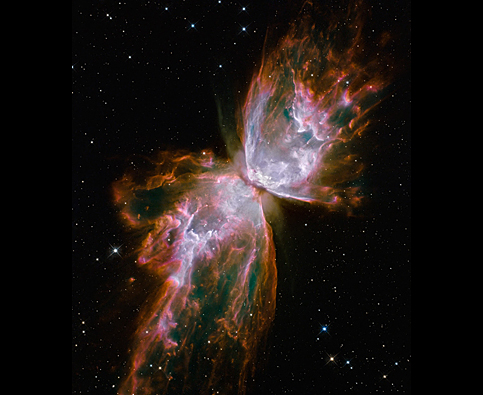
Just Awe Inspiring

Images from the Hubble Telescope.

Wow.